
Social Media Advertising for Contractors
Built specifically for home-service contractors generating $5M–$50M annually
We’re a social media advertising agency built specifically for home-service contractors, and everything we do — from creative to targeting to post-click experience — is designed to turn social demand into high-intent, closeable opportunities.
We Run Paid Social Campaigns That Don't Just Generate Leads — They Generate Revenue
Social media advertising has become one of the most misunderstood growth channels in the home-services industry. Over the last decade, contractors have been told that success is measured in clicks, impressions, and cost per lead. Agencies report dashboards filled with activity, while owners are left wondering why booked jobs don’t translate into sold work.
Contractors don’t get paid on clicks. They get paid on completed installations, profitable replacements, and projects that close cleanly without exhausting their sales teams. The gap between “lead generation” and “revenue generation” is where most social media advertising breaks down — and where most agencies fail to take responsibility.
This page exists to explain what social media advertising actually needs to look like for contractors in 2025, how buying behavior has changed, and why paid social only works when it’s built as part of a revenue system instead of a traffic source.
What Social Media Advertising Really Means for Contractors
Social media advertising is often confused with posting content, boosting posts, or running generic lead forms. Those tactics may create visibility, but visibility alone does not create revenue. For contractors, paid social must operate upstream of the sales process — shaping expectations before the phone ever rings.
Modern social media advertising is about demand creation, not demand capture. It reaches homeowners before their system fails, before panic sets in, and before competitors control the conversation. When done correctly, it positions replacement, upgrades, and planned projects as proactive decisions rather than emergency reactions.
At its core, effective paid social advertising controls the narrative around value, timing, and price. It sends traffic into systems that qualify buyers, not just collect names. Without this control, ads generate noise — not growth.
How Social Media Advertising Actually Works for Contractors
Social media advertising works differently for contractors than it does for most consumer businesses. It does not rely on capturing immediate urgency, and it does not perform well when treated like a short-term lead machine. Instead, it functions as a system that influences decisions earlier in the buying cycle — long before a homeowner is actively searching for a contractor.
When built correctly, social media advertising introduces problems, educates homeowners on options, and shapes expectations around timing, scope, and price. Buyers move from awareness to consideration gradually, through repeated exposure and education, rather than being pushed into rushed decisions. This is especially important for high-ticket replacement and upgrade projects, where trust and clarity matter more than speed.
The reason many contractor campaigns fail is not the platform itself, but a misunderstanding of this process. Ads are often disconnected from education, pricing context, and sales alignment, which leads to curiosity without readiness and volume without revenue. Contractors who succeed with paid social treat it as a coordinated system — not a single tactic.
To understand the full mechanics behind this approach, including how demand creation, education, expectation setting, and qualification work together, see our detailed breakdown on how social media advertising works for contractors.
Why Social Media Ads Fail for Most Contractors
Most social media campaigns fail for a simple reason: they generate curiosity without clarity. Ads are designed to attract attention, but they fail to prepare the homeowner for what comes next. The result is predictable.
Clicks turn into form fills. Form fills turn into unqualified calls. Call centers become overwhelmed. Homeowners are shocked by pricing. Sales teams walk into appointments already on defense. Agencies blame “lead quality,” while contractors blame marketing.
The problem isn’t Facebook, Instagram, or video ads. The problem is what happens after the click. When ads are disconnected from pricing expectations, buyer intent, and the realities of in-home sales, they create friction instead of leverage.
A Different Way to Think About Social Media Advertising
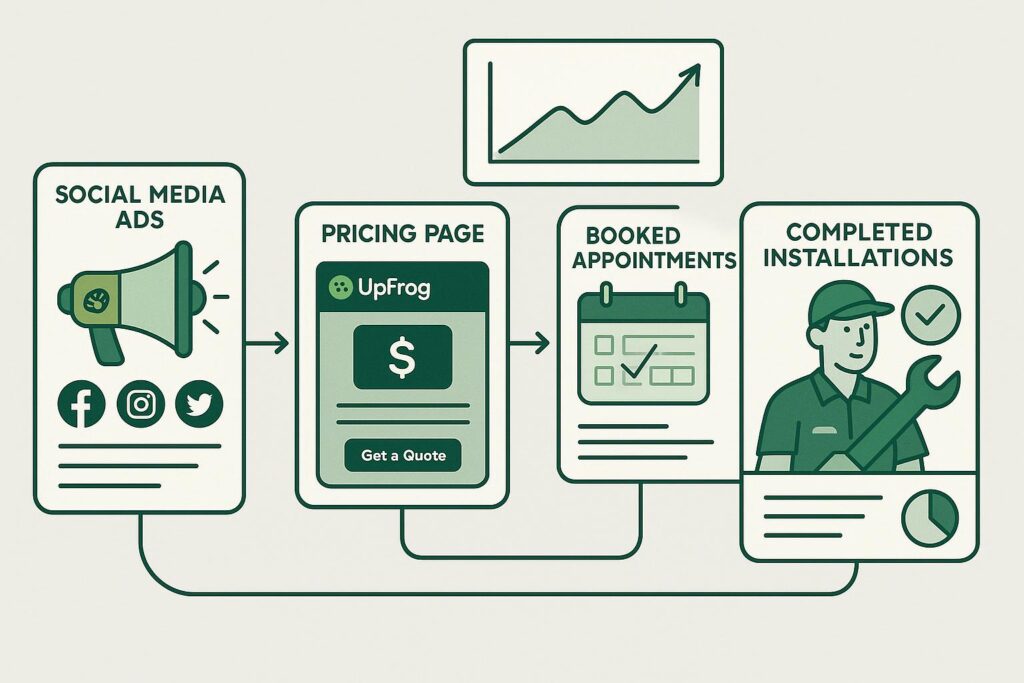
Contractors who win with paid social don’t treat advertising as a standalone tactic. They treat it as part of their revenue infrastructure. This shift in mindset changes everything.
First, successful campaigns focus on planned demand, not just emergencies. Replacement cycles, energy efficiency upgrades, financing-driven decisions, and lifestyle improvements all create far more predictable revenue than panic-driven calls.
Second, high-performing ads prioritize clarity over persuasion. Instead of hiding pricing and hoping sales teams “handle it later,” they introduce controlled pricing transparency early. Online pricing reduces shock, filters unrealistic buyers, and increases trust before the appointment is set.
Finally, effective social media advertising exists to enable sales, not replace it. When expectations are set correctly, sales teams walk into homes with momentum instead of resistance. The conversation shifts from “Why is this so expensive?” to “Which option makes the most sense?”
Where Social Media Advertising Actually Works
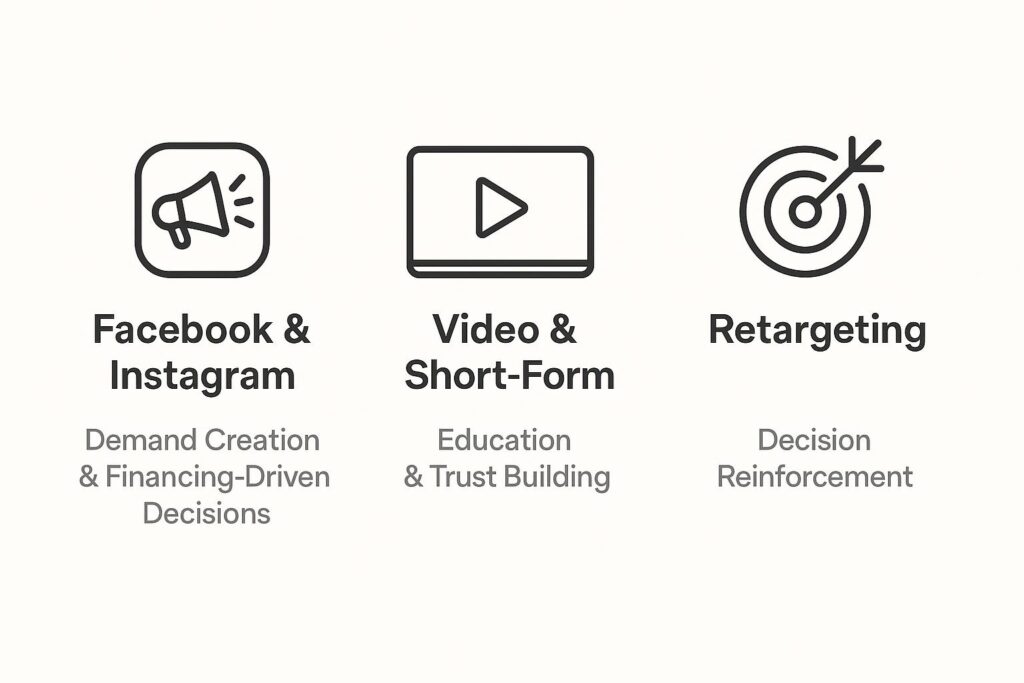
Not every platform deserves equal attention. Contractors who spread budgets across every trend usually dilute results. The most consistent performance comes from platforms that match homeowner buying behavior.
Facebook and Instagram remain the primary demand drivers for home services. These platforms excel at financing-forward messaging, replacement education, seasonal campaigns, and remarketing to undecided homeowners who are still researching options.
Video-based platforms, including YouTube and short-form video, play a supporting role when used strategically. Education-driven content builds authority, while remarketing reinforces trust for buyers who need more time before committing.
Platform selection should never be driven by hype. It should be driven by conversion behavior.
The Conversion Advantage Most Agencies Ignore

Most social media agencies stop at the lead form. That’s where performance plateaus.
High-performing contractor campaigns integrate conversion systems that qualify buyers before they ever speak to a human. This includes pricing-aware funnels that introduce realistic ranges, financing context, and option-based thinking early in the process.
When homeowners understand what they’re walking into, several things happen simultaneously: unrealistic budgets self-filter out, serious buyers lean in, close rates improve, and sales teams regain confidence in the leads they’re running.
This approach does not eliminate in-home sales. It makes them dramatically easier to win.
Who This Approach Is Built For
This model works best for contractors who want predictable install demand rather than volatile emergency volume. It favors businesses that sell replacement projects, offer financing, and care about close rate as much as lead flow.
It is especially effective for owners who are tired of agencies blaming sales teams, tired of running volume without margin, and tired of scaling chaos instead of systems.
It is not a fit for contractors chasing the cheapest leads possible, relying exclusively on breakdown calls, or unwilling to adapt to how modern buyers make decisions.
Social Media Advertising by Trade
Different trades attract different buying psychology. HVAC replacement, roofing projects, and garage door upgrades all follow distinct decision patterns, timelines, and objections. Treating them the same is a mistake.
That’s why social media advertising must be vertically specialized. Campaigns are built around the realities of each trade — not generic home-service templates.
Contractors looking to go deeper can explore:
Each vertical page expands on the nuances that matter most.
How a Revenue-Driven Social Media System Works
Every successful campaign begins with market and offer analysis. Pricing, margins, financing, and sales process all influence how ads should be structured. Without this foundation, optimization is guesswork.
Campaign architecture is then built around planned demand instead of emergencies. Messaging speaks to homeowners who are thinking ahead, not reacting late.
Traffic flows into conversion systems designed to set expectations early. These systems filter, educate, and qualify before appointments are booked.
Once live, optimization focuses on booked jobs and sold work — not vanity metrics. Sales feedback closes the loop, allowing campaigns to improve based on real outcomes instead of assumptions.
This is how advertising compounds instead of resets every month.
Traditional contractor marketing prioritizes volume. Revenue-driven social advertising prioritizes efficiency. One hides pricing and hopes sales teams overcome objections. The other sets expectations early and lets sales teams do what they do best.
Where traditional marketing creates spikes, systems create predictability. Where volume burns teams out, qualification restores trust.
The difference isn’t creative — it’s philosophy.
Why Contractors Choose This Model
Contractors move away from traditional agencies because they want partners who understand how jobs are actually sold. They want accountability beyond dashboards and clarity beyond traffic reports.
They don’t want campaigns disconnected from conversion. They want systems built to support growth, margin, and sustainability.
Most agencies talk about leads. This model talks about outcomes.
The Bottom Line
Any agency can run social media ads. Very few understand contractor buying behavior, pricing psychology, sales enablement, and conversion systems well enough to turn demand into revenue.
That difference determines whether paid social becomes a growth engine — or an expensive distraction.
What to Do Next
If you’re evaluating social media advertising for your contracting business, the real question isn’t whether ads can generate leads. It’s whether your system can turn attention into sold work without breaking your team.
Explore how this approach applies to your trade, learn how pricing clarity improves conversion, or review real-world case studies to see the model in action.
When social media advertising is built correctly, it doesn’t just drive traffic.
It drives growth.