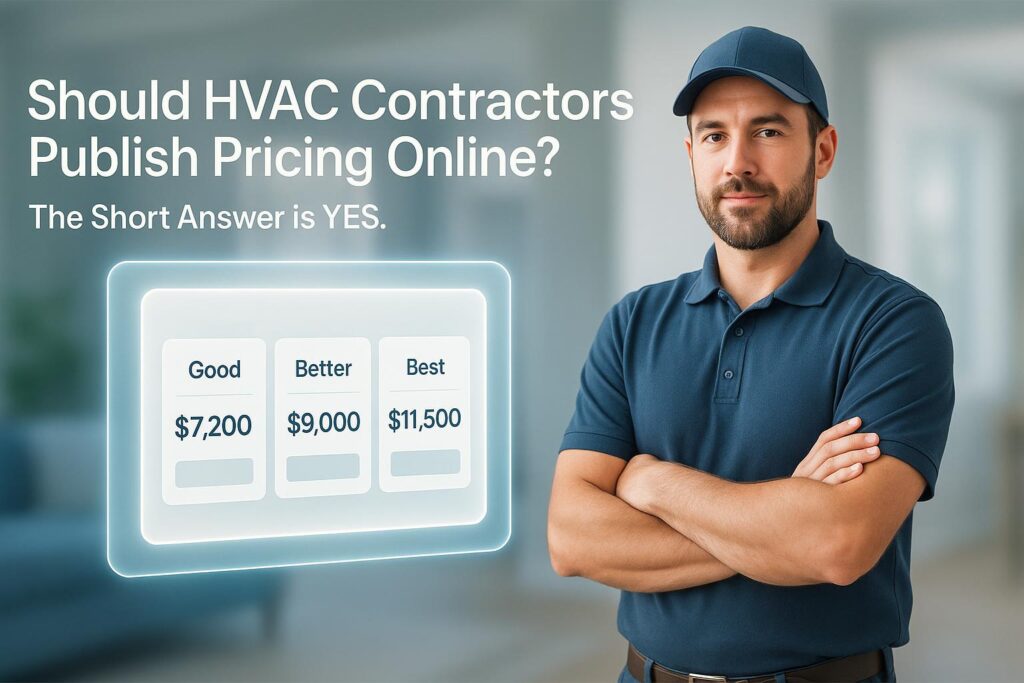
Should HVAC Contractors Publish Pricing Online? Yes, No, Maybe...
Why the "Secret Price" Era is Over—and How to Turn Transparency into Your Best Sales Rep.
If you ask ten HVAC contractors if they should put their prices online, nine will tell you “No.” They’ll say it’s too complex, that competitors will undercut them, or that customers will get “sticker shock” without a technician there to build value.
They are wrong. And their hesitation is your biggest opportunity. That opportunity exists because online pricing for contractors shifts trust earlier in the buying process, before fear and assumptions take over.
The HVAC industry is currently divided into two camps:
- Private Equity (PE) Giants: Focused on consolidation, maximizing ticket averages, and hiding prices to protect high-pressure sales tactics.
- The Modern Independents: nimble, trusted, and transparent.
The data is undeniable: 71% of homeowners are more likely to contact a contractor who lists pricing online. But simply slapping a price list on your website isn’t the answer. That is a passive strategy in an active war for market share.
This guide will explain why you must publish pricing, why the “standard” ecommerce widgets fail, and how the UpFrog Revenue Acceleration model uses pricing to dominate your local market.
The "Amazon Effect" Has Finally Hit HVAC
Homeowners today—especially the Millennials and Gen Xers who now own the majority of homes—do not shop the way they did ten years ago. They don’t call three companies to “get a bid.” They research. They filter. They decide before they call.
If your website forces them to call you just to find out if a new system costs $5,000 or $15,000, you have already lost.
The 3 Big Myths of Online Pricing
Myth 1: “My Competitors Will Undercut Me”
Reality: Your competitors already know your prices. They get the same equipment sheets and hear the same gossip. The only person you are hiding prices from is the customer.
Myth 2: “I Can’t Upsell If They See the Price”
Reality: Transparency builds the trust required for upsells. When a customer sees a “Good/Better/Best” price tier online, they self-select. Data shows that transparency often leads to higher average tickets because the customer feels in control, not cornered.
Myth 3: “Every Job is Custom”
Reality: While ductwork varies, equipment pricing is standardized. You can easily offer a “System Replacement Starting At…” or a range. The goal isn’t to give a final penny-perfect invoice online; it’s to give a qualified estimate that gets you in the door.
The Trap: "Passive" E-Commerce Widgets
Competitors like Contractor Commerce offer a “plug-and-play” store for your site. They allow you to sell filters and show system estimates. While better than nothing, this approach has a fatal flaw: It assumes the customer will find you.
A pricing widget is just a tool. It sits on your website waiting for traffic. If your SEO is weak or your brand isn’t known, that widget is a billboard in the desert.
You don’t just need a calculator. You need a Capture Engine.
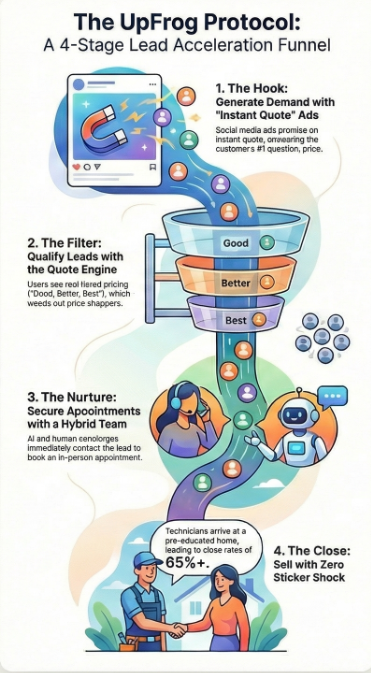
The Solution: The UpFrog Protocol
Turning Pricing into a “Lead Trap”
UpFrog isn’t just a software tool; it’s a complete Revenue Acceleration Platform designed for the independent contractor. We don’t just “show prices”—we use the promise of a price to capture high-intent leads that other contractors miss.
Here is the exact process of how UpFrog works and why it is superior to a basic “Online Store”:
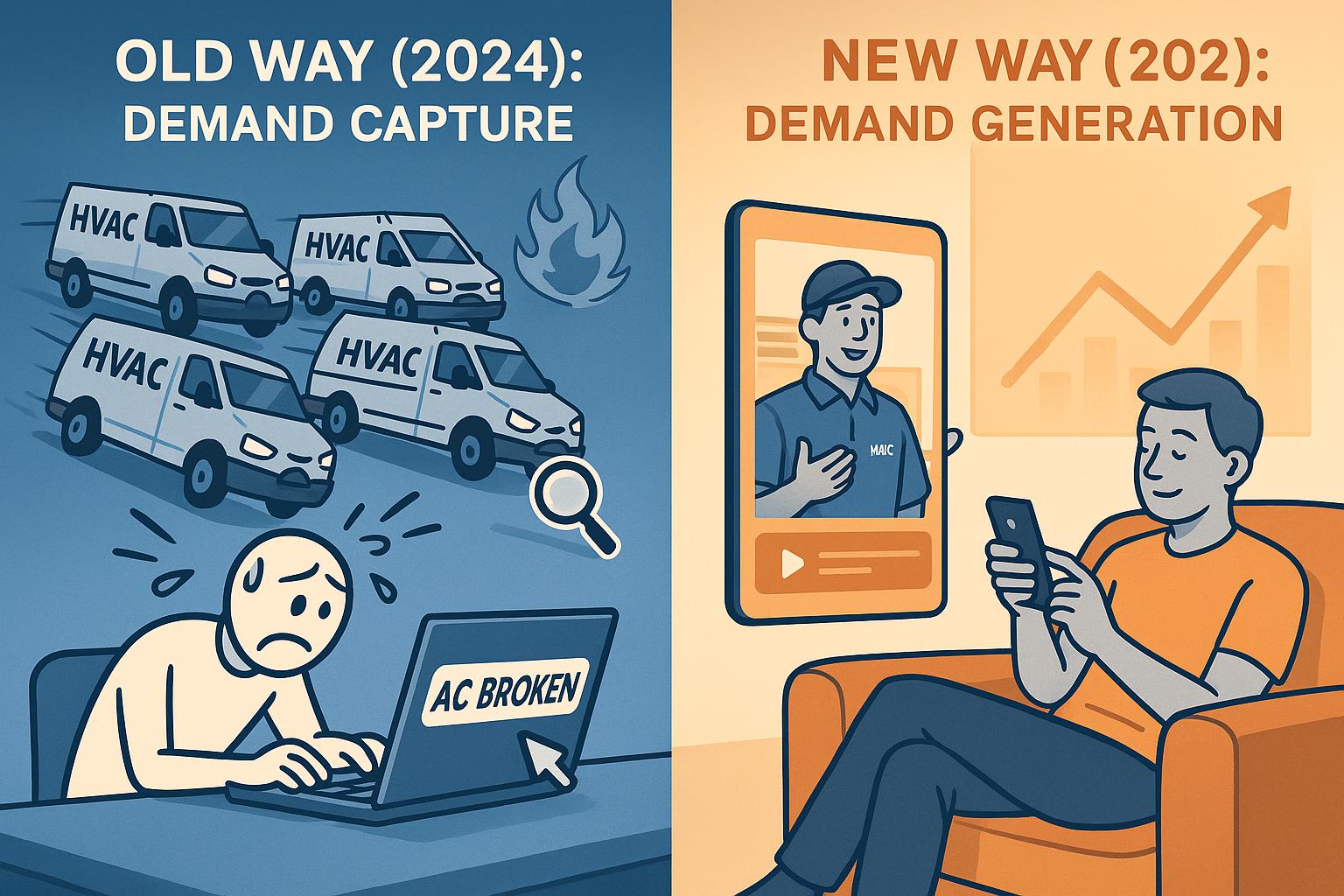
Phase 1: Active Demand Generation (The Hook)
Most contractors wait for a system to break (Google Ads/LSAs). This is the most expensive lead you can buy.
UpFrog generates demand before the emergency. We run high-converting campaigns on Facebook, Instagram, and TikTok. This demand-first approach is exactly how HVAC Social Media Advertising works when pricing context is introduced before urgency exists.
- The Ad: We don’t advertise “AC Repair.” We advertise “Get an Instant Quote for a New System in 60 Seconds.”
- The Psychology: This stops the scroll because it answers the homeowner’s #1 anxiety: “How much is this going to cost?”
Phase 2: The Instant Quote Engine (The Filter)
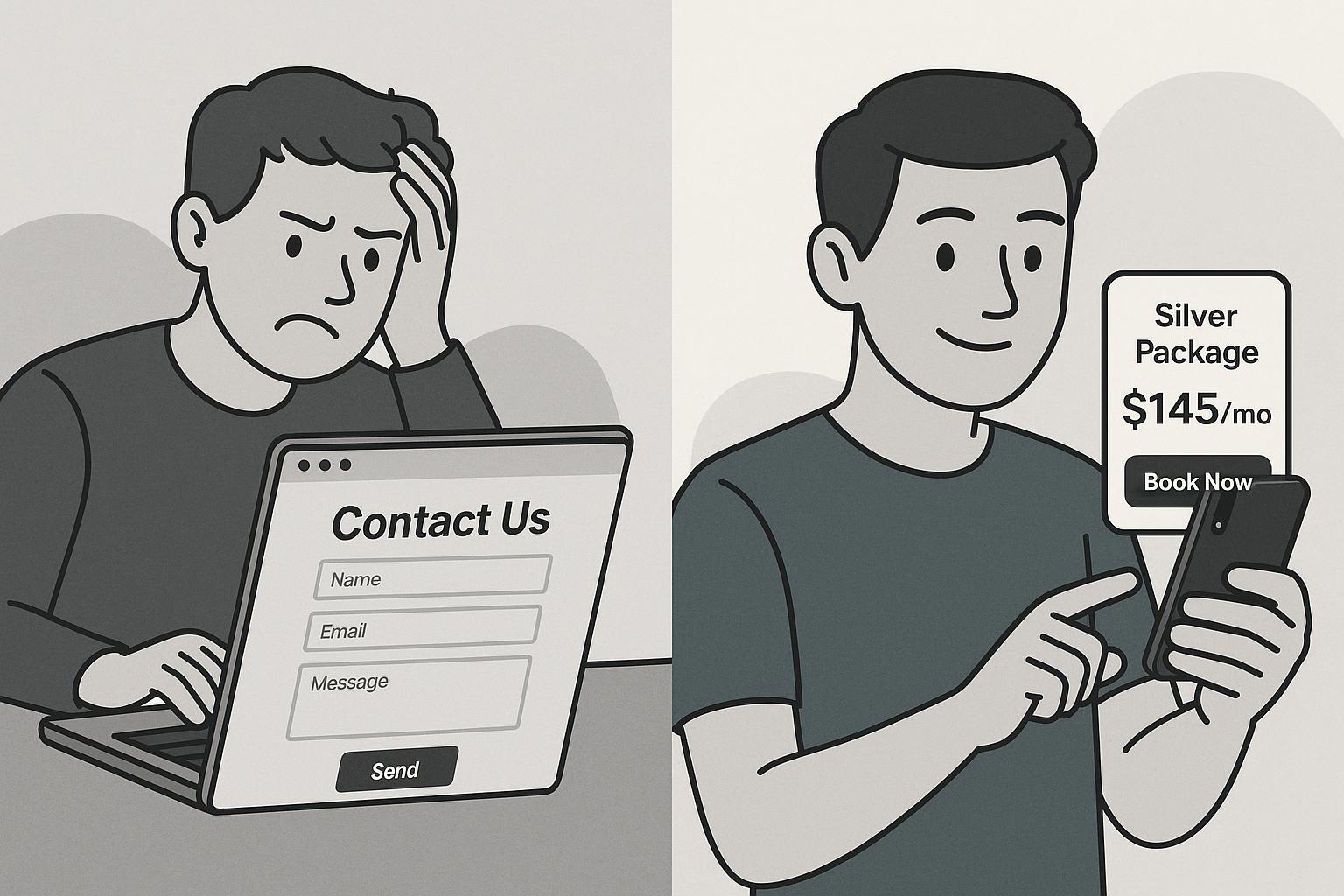
When the user clicks, they aren’t sent to a generic contact form. They enter our Instant Quote Engine.
- Frictionless: In under a minute, they enter their home size and details.
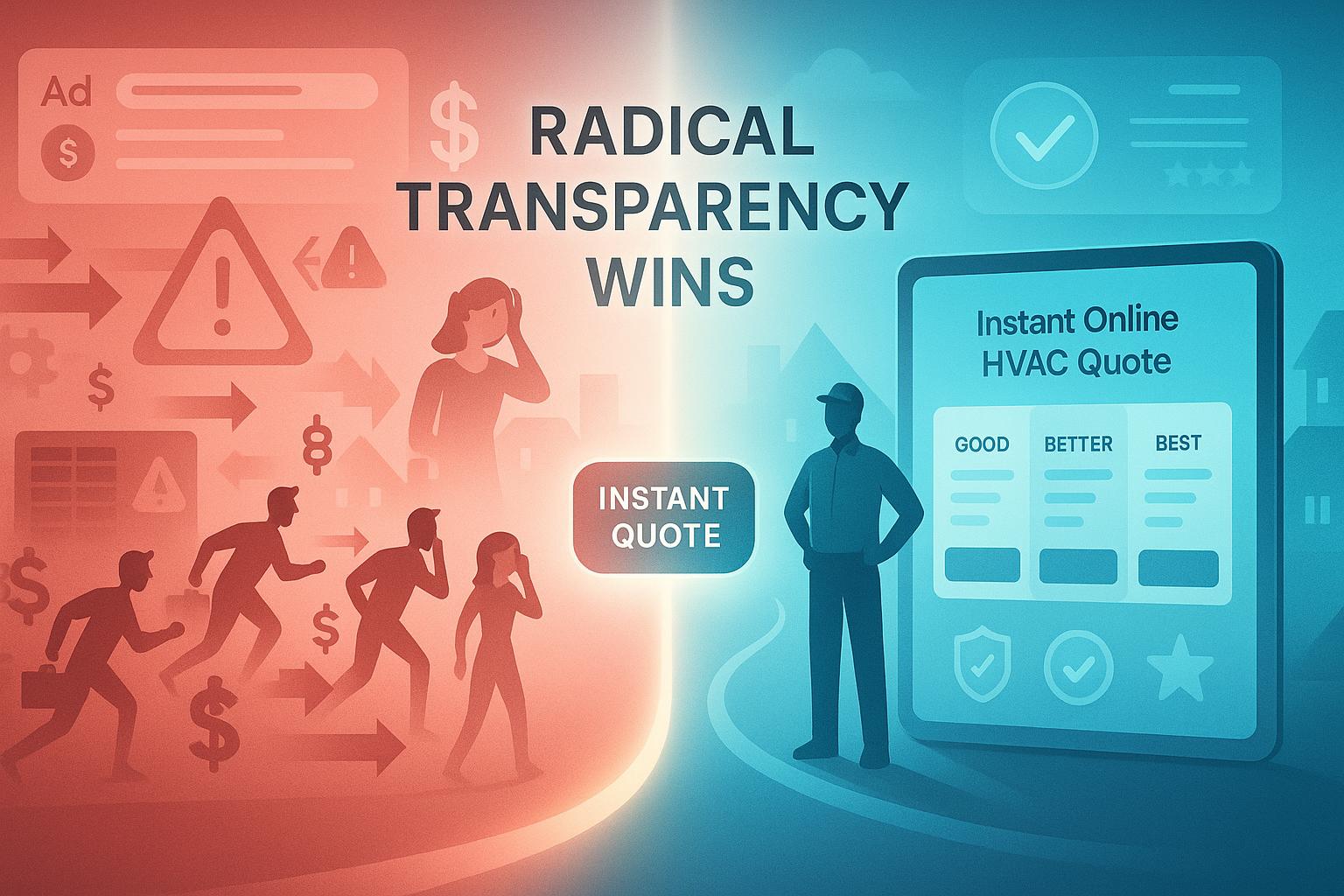
- Radical Transparency: They see real, tiered pricing (Good, Better, Best) for a full system replacement.
- The Result: If they fill out this form, they know the price is $12k+ and they are still interested. This eliminates tire-kickers instantly.
Phase 3: AI + Human Speed-to-Lead (The Nurture)
This is where UpFrog leaves standard widgets behind.
A “Buy Now” button rarely sells a $15k system. You need a conversation.
- Immediate Action: As soon as the quote is generated, UpFrog’s system triggers.
- Hybrid Approach: We use a combination of AI automation and real human concierges to text and call the lead immediately.
- The Goal: We don’t try to sell the AC over the phone. We sell the appointment. We book the time for your Comfort Advisor to go out.
Phase 4: The “Hero” Sale (The Close)
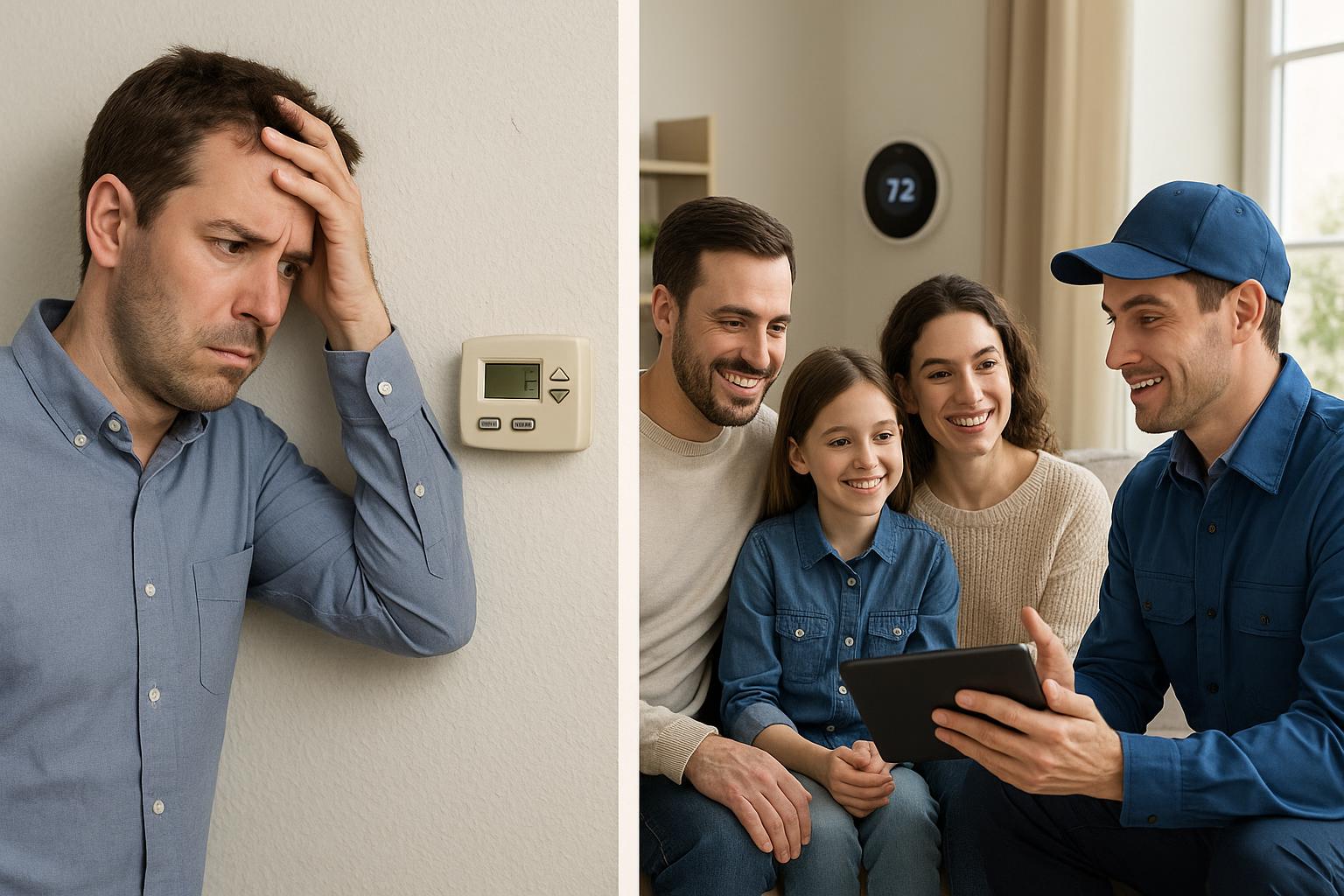
Your technician arrives at a home where the customer already knows the price.
- Zero Sticker Shock: The “sales” pressure is gone.
- Consultative Selling: Your tech validates the sizing, checks the ductwork, and confirms the “online quote.”
- Higher Close Rate: Because trust was established early, independent contractors using this model see close rates soar (often 65%+).
Comparison: The Widget vs. UpFrog
Feature | Standard “Online Store” (Competitors) | The UpFrog Revenue Engine |
Primary Function | E-commerce shopping cart | Lead Generation & Qualification Funnel |
Traffic Source | You must do your own SEO/Ads | Done-For-You Social Ads (FB/Insta/TikTok) |
Customer Experience | “Shopping” | “Consulting” & “Quoting” |
Follow-Up | Basic email receipt | AI + Human Team Appointment Setting |
Philosophy | Passive Convenience | Aggressive Market Share Capture |
Conclusion: The "Trust Gap" is Your Weapon
Private Equity firms are buying up local shops and turning them into sales machines that hide prices to maximize margins. This leaves a massive “Trust Gap” in the market.
By publishing your pricing via UpFrog, you signal to your community that you have nothing to hide. You aren’t just selling HVAC; you are selling certainty.
Don’t just add a pricing page to check a box. Build a system that feeds your sales team.